London Wildlife – Wildlife Removal London, Ontario
Serving London, Ontario · Mon–Fri 8:30 a.m.–5 p.m.
Wildlife Removal in London, Ontario
London Wildlife removes raccoons, squirrels, bats, skunks, opossums, birds, mice and rats from homes and businesses across London, Ontario, using humane methods. We inspect your property, find out how animals are getting in, remove them safely, then seal entry points to keep them out. Call 226-271-5510 to book an inspection.
Locally owned · 5+ years in business · 5-year guarantee on sealed entry points · Follow-up visit included · Humane, chemical-free wildlife removal · Mon–Fri 8:30 a.m.–5 p.m.
Is Wildlife Living in Your Home or Business?
Wildlife problems in London rarely fix themselves. When an animal finds a warm, dry, quiet spot in your attic, walls, chimney or under your deck, it settles in. Females often use the spot to raise young, and they come back to it year after year. What starts as a few noises at night can turn into torn insulation, chewed wiring, droppings, odours and damaged roof vents or soffits.
Common signs you need a wildlife removal professional:
- Scratching, thumping or scurrying in the attic, walls or ceiling, especially at dusk, overnight or early morning
- Holes in soffits, fascia, roof vents, shingles or the roof line
- Droppings, urine stains or a strong musky smell
- Dug-out holes along a deck, porch, shed or foundation
- Small holes dug in the lawn overnight
- Bats flying out of the roof line at dusk, or a bat found inside the house
- Chewed wires, ducts or stored items in the attic, garage or basement
If you’re hearing or seeing any of these, it’s best to act early. The longer animals stay, the more damage they can do and the more likely there are young involved.
Our Wildlife Removal Services in London
We handle the animals London homeowners deal with most. Each service page explains the signs, our method and the questions we’re asked most often.
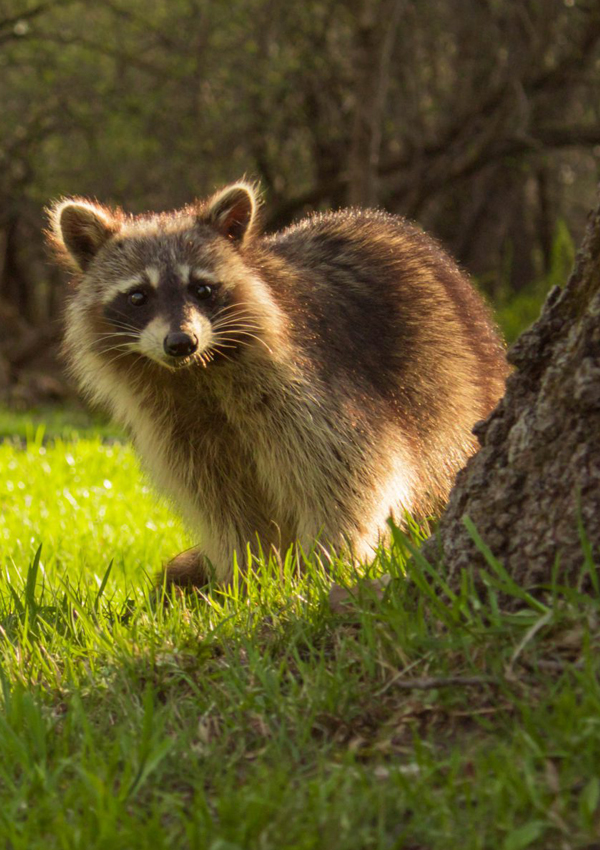
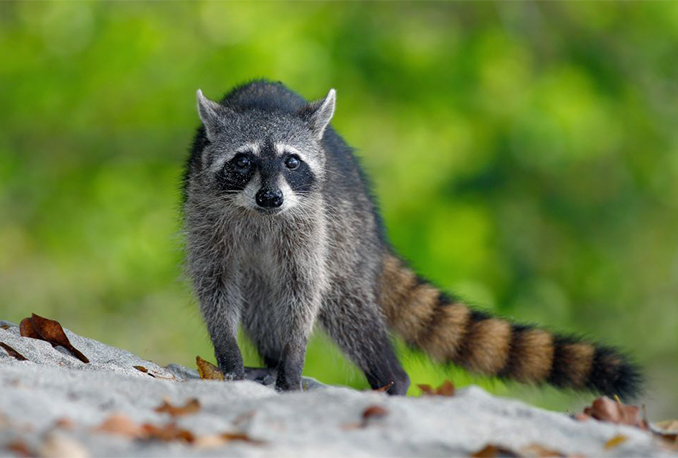
Raccoons are the strongest and most destructive animals that get into London homes. They tear open roof vents, soffits and chimney caps to reach a den site, and mothers often have kits in the attic in spring. We remove raccoons humanely, make sure no young are left behind, and reinforce the entry point so it can’t be torn open again.
Grey, black and red squirrels chew through soffits, vents and roof lines and can damage attic wiring and insulation. We use one-way doors so squirrels can leave but can’t get back in, then seal every gap they could use.
Several Ontario bat species are protected, so bats have to be excluded humanely, and timing matters during summer maternity season. We find the gaps bats use, install exclusion devices and seal the building once they’re gone.
Skunks den under decks, porches, sheds and concrete pads, and their spray can make a yard unusable. We confirm the animal is gone, then seal the space so it can’t move back in.
Opossums shelter under decks and sheds and in garages and crawl spaces, and they’re drawn by pet food, garbage and compost. We remove possums humanely and close off the spaces they use.
Pigeons, starlings and sparrows nest in vents, soffits, eavestroughs and signs, and their droppings build up fast. We remove the nests and screen the openings so birds can’t come back.
Mice and rats get in through gaps smaller than you’d expect, around pipes, vents, foundations and garage doors. We find and seal those gaps with rodent-proof materials so the problem stops at the source. For mice and rats already inside, you choose between professional rodent bait and traps.
Raccoon latrines, bat guano and rodent droppings can stay behind long after the animals leave. We remove droppings and soiled material and clean the affected area once the home is sealed.
A dead animal in a wall, attic, crawl space or under a deck causes a strong smell and attracts insects. We find it, remove it and clean the spot.
Want to know what a job costs before you call? See our Wildlife Removal Cost guide.
How Our Humane Wildlife Removal Works
Every job follows the same steps, so you know what to expect from the first call to the final check.
1. Inspection. A technician inspects your property from the roof line to the foundation. They look for entry points, signs of young, damage and the weak spots animals could use next, then explain what they found. Every home is different, so we inspect first and give you an exact quote before any work starts.
2. Check for young. In spring and summer, we check for babies before anything is closed up. Babies are removed by hand and reunited with the mother, never sealed inside.
3. Humane removal. Depending on the animal and the season, we use one-way doors or live traps, following Ontario’s rules. The animal leaves and can’t get back in. Our wildlife removal uses no poisons or harsh chemicals.
4. Exclusion and sealing. We seal the entry points with heavy-gauge screening and chew-proof metal, and secure caps, vents and soffits so animals can’t get back in.
5. Follow-up visit (included). About two weeks later, we come back to remove the one-way doors once the animals are out and confirm the work is holding.
6. 5-year guarantee. Animals won’t get through any of the work we did. The guarantee covers only the entry points we sealed. It doesn’t cover new openings from other causes, such as roof damage or shingles torn off later.
Humane, Safe and in Line with Ontario Rules
Humane removal is the right thing to do. It also works better long-term. Trapping and relocating an animal usually leaves the entry point open for the next one, and it can separate a mother from her young.
Ontario’s Fish and Wildlife Conservation Act lets property owners deal with nuisance wildlife on their own property. But an animal that is live-captured generally has to be released within one kilometre of where it was caught, so moving a raccoon or skunk across town is not allowed. Seven Ontario bat species are listed as endangered under the Species Conservation Act, 2025, and all bats are specially protected under the Fish and Wildlife Conservation Act, so bats must be excluded humanely and timed around the summer maternity season.
Our approach is built around these rules. We remove animals humanely and close up the building so the problem doesn’t come back.
How Much Does Wildlife Removal Cost in London, Ontario?
Most wildlife removal jobs in London cost about $700 to $2,000+, plus HST. Exclusion work usually starts around $700, and very small jobs can cost less. Large homes that need feces clean-up and extensive exclusion work commonly reach $1,500 to $2,000 or more. Every home is different, so an inspection is needed for an exact quote.
What changes the price:
- Access. Two-storey and steep roofs take more equipment and time.
- Number of entry points. Sealing one vent costs less than sealing a whole roof line.
- Young present. Spring and summer jobs need babies removed by hand and reunited with the mother.
- Materials. Heavy-gauge screening and chew-proof metal cost more, but they last.
- Clean-up. Feces and guano clean-up adds to the job.
Every price includes the follow-up visit to remove the one-way doors, and the sealing work is backed by our 5-year guarantee on the entry points we seal. For a full breakdown, see Wildlife Removal Cost in London.
Areas We Serve
London Wildlife serves residential and commercial properties throughout the City of London, Ontario, including Byron, Masonville, Hyde Park, Lambeth, Old North, Old South, Westmount, Wortley Village, Oakridge, White Oaks and Argyle. We serve London only. If you’re not sure whether we cover your address, call 226-271-5510 and we’ll let you know.
When Is Wildlife Most Active in London?
Wildlife pressure on London homes changes through the year, and timing affects how a job is done:
- Late winter to spring (February–May): raccoons, squirrels and skunks look for den sites to have their young. This is the busiest season for attic and under-deck calls, and the season when young are most likely to be present.
- Summer (June–August): bat maternity colonies are in place, young raccoons and squirrels grow and get louder, and skunks dig lawns for grubs.
- Fall (September–November): animals look for warm winter shelter. Squirrels often have a second litter in late summer, and fall is the best time to seal a home before winter.
- Winter: raccoons and squirrels stay active in attics on milder nights, and damage can build unnoticed.
Sealing a home before spring or before winter is the most cost-effective way to prevent problems.
What to Do Until We Arrive
- Keep children and pets away from the area and don’t try to handle or corner the animal.
- Don’t block the entry hole while animals may be inside. Trapped animals, especially mothers with young, cause more damage trying to get out, and young left inside can die in the attic.
- Bring pet food indoors and secure garbage and compost bins.
- Note when you hear activity and where. It helps us identify the animal faster.
Why London Homeowners Choose London Wildlife
- Locally owned. We’re a London company and know the housing stock here, from older brick homes near downtown to newer subdivisions.
- 5+ years in business. We’ve been removing wildlife from London homes for more than five years.
- 5-year guarantee. Animals won’t get through the work we did. The guarantee covers the entry points we seal.
- Trained professionals. Our technicians know how each animal behaves and how to handle every situation carefully.
- Humane, chemical-free wildlife removal. Our wildlife work uses safe products, with no poisons and no harsh chemicals.
- Thorough exclusion. We fix the reason the animal got in, not just the animal.
- Follow-up visit included. We come back to remove the one-way doors and check the job.
- Homes and businesses. We serve houses, rentals, offices and commercial properties.
Wildlife Removal FAQs
How much does wildlife removal cost in London, Ontario?
Most wildlife removal jobs in London cost about $700 to $2,000+, plus HST. Very small jobs can cost less, and large homes that need feces clean-up and extensive exclusion work commonly reach $1,500 to $2,000 or more. Every home is different, so an inspection is needed for an exact quote.
Does the City of London remove raccoons or other wildlife from my property?
No. The City of London does not remove healthy wildlife from private property. Property owners are responsible for wildlife conflicts on their own homes and land, which is why most people hire a private wildlife removal company. A raccoon under your deck isn’t a matter for the police.
What is the difference between animal control and wildlife removal?
In London, “animal control” usually means City animal services, which focus on pets and domestic animals. Wildlife removal is a private service that removes wild animals such as raccoons, squirrels, bats, skunks and possums from homes and businesses, then seals the entry points.
Can I trap and relocate a raccoon or skunk myself?
Ontario allows property owners to deal with nuisance wildlife, but a live-captured animal generally has to be released within one kilometre of where it was caught. Relocating it across town isn’t allowed. Trapping can also orphan young left inside, so professional exclusion is usually safer and more effective.
How do you get animals out without hurting them?
We usually install a one-way door or exclusion device over the main entry point. The animal leaves on its own to feed but can’t get back in. When young are present, we make sure they’re removed with or reunited with the mother. Then we seal the building.
How do I know what animal is in my attic?
Timing and sound are the best clues. Heavy thumping at night usually means raccoons. Light scurrying in the early morning and late afternoon usually means squirrels. Faint squeaking or scratching at dusk can mean bats. An inspection confirms the animal from droppings, tracks and entry points.
How long does wildlife removal take?
Most jobs take more than one visit. Inspection and setting up exclusion usually happen on the first visit, the animals typically leave within a few days, and we come back to confirm they’re gone and finish sealing. Bat and baby-season jobs can take longer because of timing.
Will the animals come back after removal?
Not if the entry points are properly sealed. Animals return when the original hole, or another weak spot nearby, is left open. That’s why every job includes sealing the entry point and reinforcing other vulnerable areas. Our 5-year guarantee covers the entry points we seal.
Is it dangerous to have wildlife in my house?
It can be. Raccoons can carry rabies and raccoon roundworm. Bats can carry rabies, and droppings can contaminate insulation. Squirrels chew wiring, which is a fire risk. Don’t handle wild animals. If anyone may have had contact with a bat, contact the Middlesex-London Health Unit or your health care provider.
Do you remove wildlife from businesses and commercial buildings?
Yes. London Wildlife serves both residential and commercial properties in London, Ontario, including offices and other workplaces. We inspect the building, remove the animals humanely and seal the entry points.
What are your hours?
We’re open Monday to Friday, 8:30 a.m. to 5 p.m. Call 226-271-5510 or send us a message through the quote form, and we’ll get back to you to book an inspection.
Do you offer a guarantee?
Yes. Our exclusion work comes with a 5-year guarantee: animals won’t get through any of the work we did. The guarantee covers only the entry points we sealed. It doesn’t cover new openings from other causes, such as roof damage or shingles torn off later.
Book a Wildlife Removal Inspection in London
Hearing noises in the attic, or found a hole under the deck? Call London Wildlife at 226-271-5510 or request a quote online. We’ll inspect your property, explain what we find and give you an exact quote to remove the animals humanely and keep them out. We’re open Monday to Friday, 8:30 a.m. to 5 p.m.